
Public Sentiment and Issue Extraction of BPJS Healthcare Services on Social Media Using IndoBERT and LDA
Keywords:
Sentiment Analysis, Social Media, BPJS, Issue Extractions, Latent Dirichlet Allocation (LDA), Knowledge Discovery In Database (KDD)Abstract
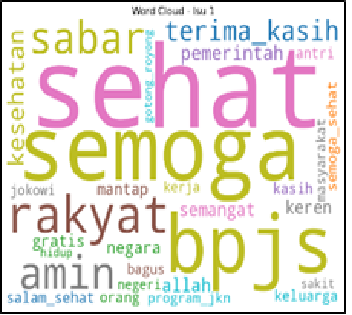
The Social Security Provider Agency (BPJS), available to all citizens of the country, delivers culture‐sensitive health care. It’s no secret that BPJS, which provides social insurance coverage for the public, always gets a mixture of scolding and satisfaction for its services. Many reviews of BPJS have been posted on social media including YouTube, Instagram and Twitter (X). For this reason, it was necessary to examine developing issues viewed from the public's point of view against BMP services, and provide consideration to the government about which unit needs to be improved and maintained at a satisfactory in quality service. This study dates the KDD( Knowing Discovery in Databases) workflow. Sentiment classification is performed in Indonesian language with IndoBERT model by classifying the sentiments into 3 categories: positive sentiment, neutral sentiment and negative sentiment. Then issue extraction is conducted within each of the sentiment groups via LDA. The statistics in Table 3 also suggest that social media users are positive, neutral and negative by 15.5%, 40.6% and 43.9% respectively, whose extractions imply double issues with respect to each sentiment polarity category. Positive sentiment snippets are issues on public health and welfare, service user BPJS experience and health service quality. Neutral attitude has to do with administration and daily application of BPJS service, including technical procedure like registration, the use of the service itself (healthcare facilities), user interaction facility for BPJS system. Language behaviorCurrently, negative sentiment stems from medical service delivery and prices of BPJS class categories, as well as government policies on premiums.
References
[1] M. Boukabous and M. Azizi, “Crime prediction using a hybrid sentiment analysis approach based on the bidirectional encoder representations from transformers,” Indonesian Journal of Electrical Engineering and Computer Science, vol. 25, no. 2, pp. 1131–1139, Feb. 2022, doi: 10.11591/ijeecs.v25.i2.pp1131-1139.
[2] Yusriman, “Interaksi Sosial dalam Era Digital: Dampak Teknologi Terhadap Hubungan Manusia,” Jurnal Dinamuka Sosial dan Sains, vol. 2, pp. 454–461, Feb. 2025, doi: 10.60145/jdss.v2i2.121.
[3] B. Setiawan, “A Review of Sentiment Analysis Applications in Indonesia Between 2023-2024,” Journal of Information Engineering and Educational Technology (JIEET), vol. 8, no. 2, pp. 71–83, May 2024, doi: 10.26740/jieet.v8n2.p71-83.
[4] D. L. Girsang, T. S. Elenaputri, and A. Sidiq, “Analisis Sentimen Masyarakat terhadap Layanan BPJS Kesehatan dan Faktor-faktor Pendukung Opini dengan Pemodelan Natural Language Processing (NLP),” Emerging Statistics and Data Science Journal, vol. 1, no. 2, pp. 238–249, 2023, doi: 10.20885/esds.vol1.iss.2.art24.
[5] I. R. Hidayat and W. Maharani, “General Depression Detection Analysis Using IndoBERT Method,” International Journal on Information and Communication Technology (IJoICT), vol. 8, no. 1, pp. 41–51, Aug. 2022, doi: 10.21108/ijoict.v8i1.634.
[6] S. Fathoniah and C. Rozikin, “Analisis Sentimen Masyarakat terhadap Teroris dalam Media Sosial Twitter menggunakan NLP,” Jurnal Ilmiah Wahana Pendidikan, vol. 8, no. 13, pp. 412–419, Aug. 2022, doi: 10.5281/zenodo.6962682.
[7] R. Puspita and A. Widodo, “Perbandingan Metode KNN, Decision Tree, dan Naïve Bayes Terhadap Analisis Sentimen Pengguna Layanan BPJS,” Jurnal Informatika Universitas Pamulang, vol. 5, no. 4, pp. 646–654, Dec. 2021, doi: 10.32493/informatika.v5i4.7622.
[8] R. Darman, “Analisis Sentimen Respons Twitter terhadap Persyaratan Badan Penyelenggara Jaminan Sosial (BPJS) di Kantor Pertanahan,” Widya Bhumi, vol. 3, no. 2, pp. 113–136, 2023, doi: 10.31292/wb.v3i2.61.
[9] S. Caspari-Sadeghi, “Learning Assessment in the Age of Big Data: Learning Analytics in Higher Education,” Cogent Education, vol. 10, no. 1, pp. 1–11, 2023, doi: 10.1080/2331186X.2022.2162697.
[10] D. D. Nada, Soehardjoepri, and R. M. Atok, “Perbandingan Analisis Sentimen Mengenai BPJS pada Media Sosial Twitter Menggunakan Naïve Bayes Classifier (NBC) dan Support Vector Machine (SVM),” vol. 11, no. 6, pp. D480–D485, 2022, doi: 10.12962/j23373520.v11i6.96330.
[11] F. N. Hikmah, S. Basuki, and Y. Azhar, “Deteksi Topik Tentang Tokoh Publik Politik Menggunakan Latent Dirichlet Allocation,” REPOSITOR, vol. 2, no. 4, pp. 415–426, 2020, doi: 10.22219/repositor.v2i4.30515.
[12] B. Wilie et al., “IndoNLU: Benchmark and Resources for Evaluating Indonesian Natural Language Understanding,” Oct. 2020, doi: 10.48550/arXiv.2009.05387.
[13] S. Alaparthi and M. Mishra, “Bidirectional Encoder Representations from Transformers (BERT): A sentiment analysis odyssey,” Jul. 2020, doi: 10.48550/arXiv.2007.01127.
[14] M. Atalya, A. Leza, W. Utami, P. Anugrah, and C. Dewi, “Prediksi Prestasi Siswa SMAS Katolik Santo Yoseph Denpasar Berdasarkan Kedisiplinan dan Tingkat Ekonomi Orang Tua Menggunakan Metode Knowledge Discovery in Database dan Algoritma Regresi Linier Berganda,” Jurnal Mahasiswa Teknik Informatika (JATI), vol. 8, no. 1, pp. 373–379, 2024, doi: 10.36040/jati.v8i1.8754.
Downloads
Published
Issue
Section
License
Copyright (c) 2025 Valentino Rossi, Balgis Putri Prioni, Cintha Hafrida Putri (Author)

This work is licensed under a Creative Commons Attribution-ShareAlike 4.0 International License.


